
PICTURING NAGASAKI
Nagasaki, Japan • August 9th, 1945
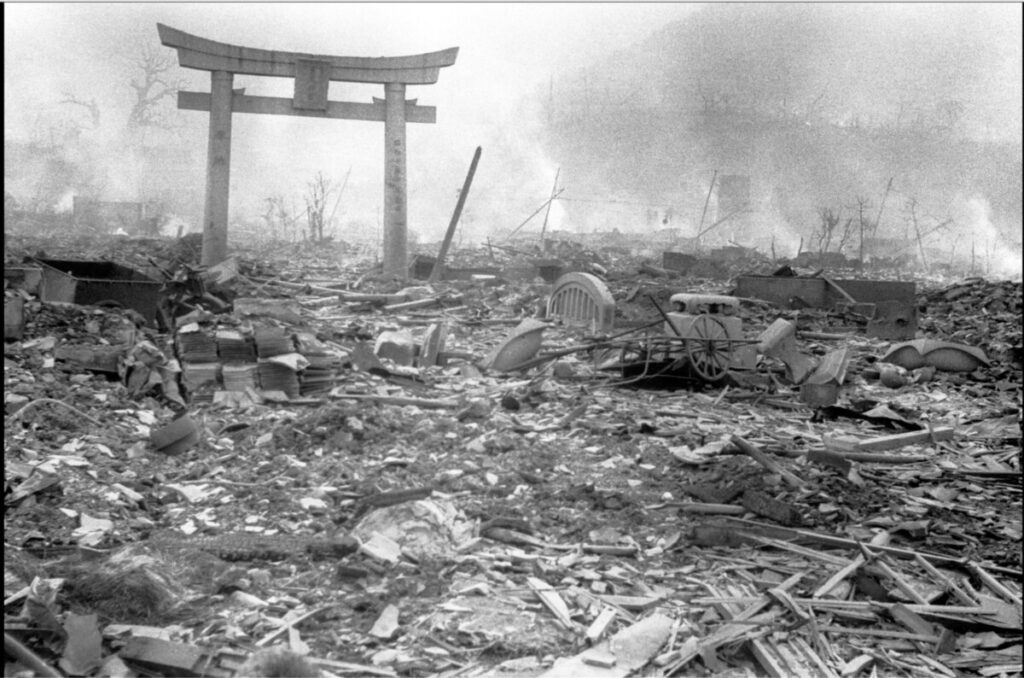
The Nagasaki bombing of August 9, 1945, was in a certain way an afterthought, the city picked after another target was obscured by cloud cover. Historically, Nagasaki suffers from the same fate, often treated as a footnote to the bombing of Hiroshima. Nonetheless, bout 60 to 80 thousand people died there, about half immediately, the rest over the next few months. Almost all were civilians.
The bomb, dubbed “Fat Man” had a five kilo plutonium core. The cloud from the bombing of Nagasaki on August 9, 1945 was the one that was first dubbed “a mushroom” by William L. Lawrence, New York Times reporter and government flak.
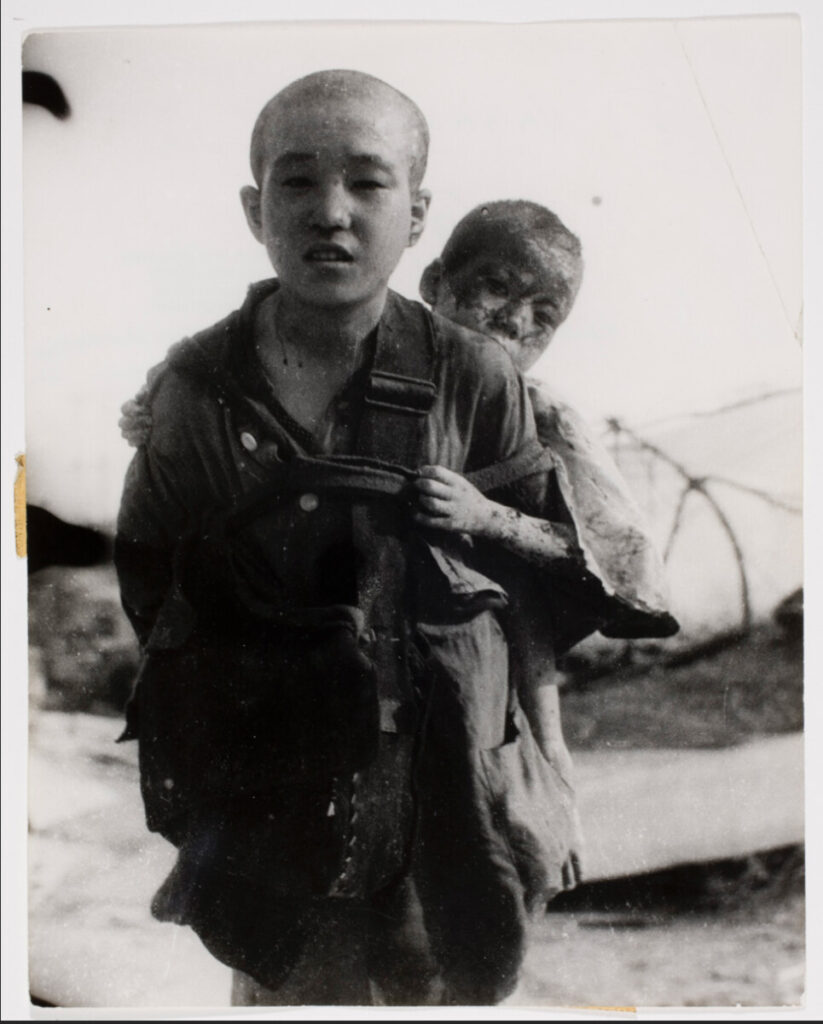
The photos from the air, taken by the B-29 dubbed “The Great Artiste” are well known, although often conflated with similar images from Hiroshima three days earlier; images from the ground are less often seen. The most haunting ones were taken by Yosuke Yamahata (1917-1966).
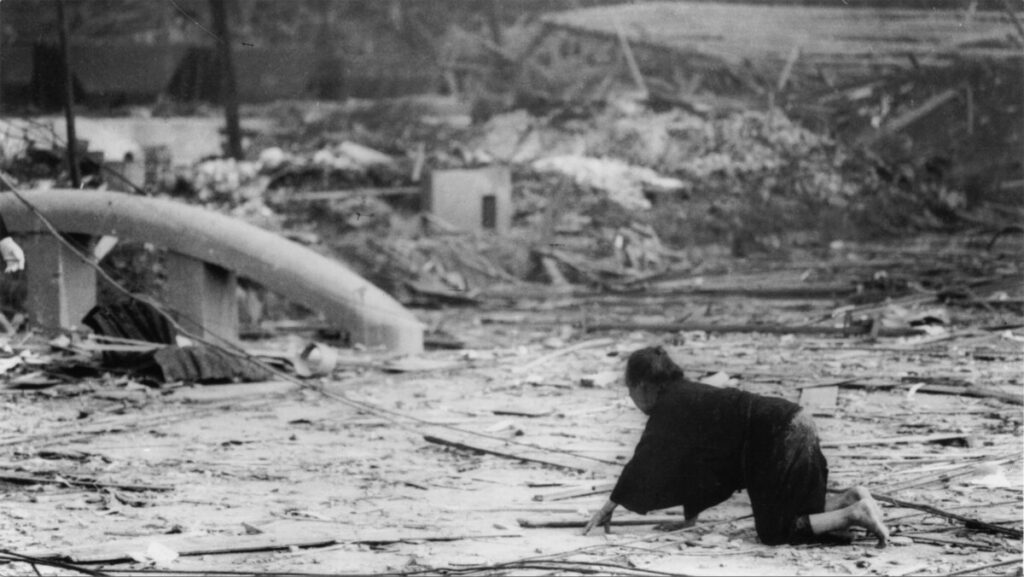
In 1994 Yamahata’s images were among the first removed from the planned exhibition that included the Enola Gay. The next year, San Francisco photographer Chris Beaver published the photos as a way of making them available to an American public. Through Beaver, I got in touch with Yamahata’s son, Shogo, who sent me scans to use in my film, Hiroshima Bound, (2015). His images are the most extensive documentation of the effects of the bomb, but also some of the most poignant.
Speaking in 1952 Yamahata described his own sense of his mission like this, “Human memory has a tendency to slip, and human judgement to fade with the years, with changes in life style and circumstance, but the camera just as it seized the grim realities of that time, brings the stark facts of seven years ago before our eyes, without the need for the least embellishment.”
This year the Bulletin of Atomic Scientists have set the Doomsday Clock to 85 seconds before midnight. Their thinking is not hard to figure out. Aside from Russian threats toward the Ukraine, both the US and Russia have moved away from arms control agreements, and along with the Chinese are developing new generations of nuclear weapons. The New Start agreement to limit the number of nuclear weapons expired in February. As the US steps away from allies, questions about the US “nuclear umbrella” are encouraging encouraging several countries to investigate developing their own nuclear weapons in both Europe and Asia.
The UN tells us that civilian casualties are surging in the last few years. Meanwhile, this year has seen the rise of autonomous weapons deployed to kill, along with new developments in space and AI weapons. All this is happening while a war, presumably started by Israel and the US to prevent Iran from acquiring nuclear capability has metastasized into something neither localized nor clearly endable.
I’m from Berkeley, and old enough to remember a peace movement that nowadays seems almost quaint, and lost in the mists of time. Today, nuclear worries are overshadowed by rapidly mounting threats to democracy and the daily brutality of climate change. Yet a day of memory like today and photographs like Yamahata’s remind us that thinking, talking, and even taking pictures, can and should be essential parts of our resistance.
Yosuke Yamahata’s Photographs can be found on this site: